Genres
Jazz is a musical family that has evolved significantly over the years. Here are the most common jazz subgenres used for swing dancing:
- Swing Era: Big Bands / Orchestras
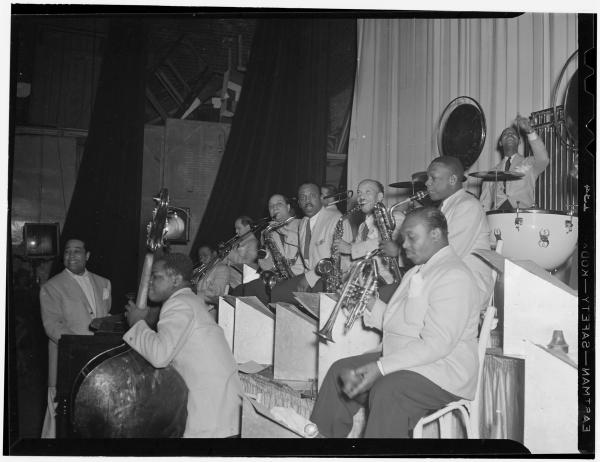
Big bands are emblematic of the swing era. Usually consisting of around 17 musicians, the vast majority of big bands played for dancers in huge ballrooms. Big band swing can be considered the pop music of the era — musically accessible and well-suited to dancing. The various types of swing dances were largely developed with big band swing. It's not surprising that, even today, this remains the music best suited to swing dancing.
- Swing Era: Small Combos
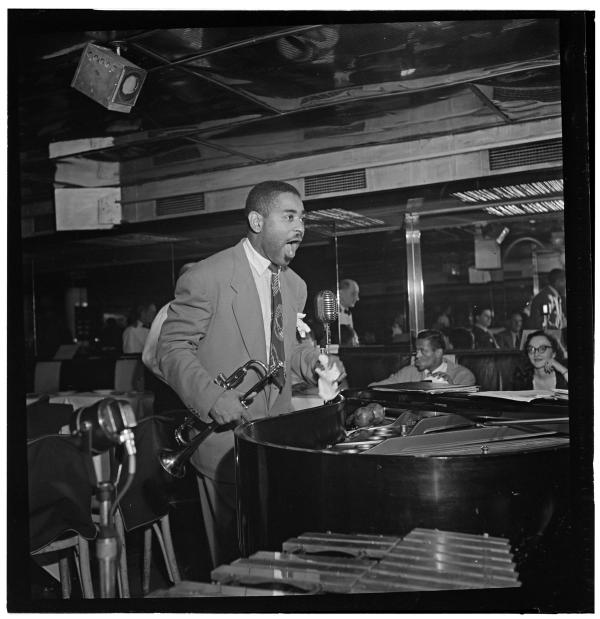
Between 3 and 9 musicians, these formations have a repertoire and style similar to big bands, but often leave room for more improvisation. Their intimate format is perfect for featuring one or two soloists, as well as less common instruments such as electric guitar, vibraphone and even harpsichord. Although these recordings were often not created with dancing in mind, they are still very accessible to dancers.
- Swing Era: Show Tunes / Tin Pan Alley
Most jazz songs and standards were composed by Tin Pan Alley composers and then adapted and arranged for big bands. Consequently, a popular Tin Pan Alley song in its original context will not usually have the qualities of swing, even if it was composed in the same years. For example, George Gershwin's song "I Got Rhythm" was originally composed for the musical "Girl Crazy", not for dancing.
- Swing Era: Barbershop / Vocal Ensembles
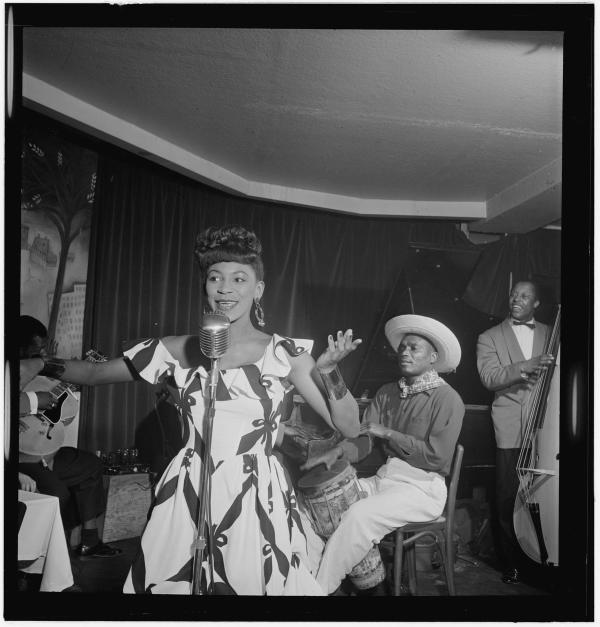
Some swing-era jazz ensembles featured vocal groups like The Mills Brothers or The Andrews Sisters. Such music is generally less suitable for dancers. To make space for the vocals, instrumental sections were often constrained, making rhythms more difficult to hear.
- Dixieland / Trad Jazz / New Orleans / Charleston
The precursor of swing music, this music was popular in the 1920s and early 1930s. This kind of music is easily recognized by the emphasis on beats 1 and 3, with the tuba replacing the double bass, or banjo replacing guitar, soloists playing in polyphony, and lots of breaks in the arrangements.
- Jump Blues / Jive / Boogie Swing
Swing music with strong blues or boogie influences. Often featuring a "shout" vocalist.
- Contemporary Swing
These contemporary jazz bands recreate the music of the swing era with original or classic arrangements of jazz standards, or with original compositions inspired by the era.
- Bebop / Modern Jazz / Cool Jazz / Hard Bop
A broad grouping of post-swing musical styles. This kind of music was not designed for dancing, but some tracks can be interesting for dancers.
- Jazz Manouche
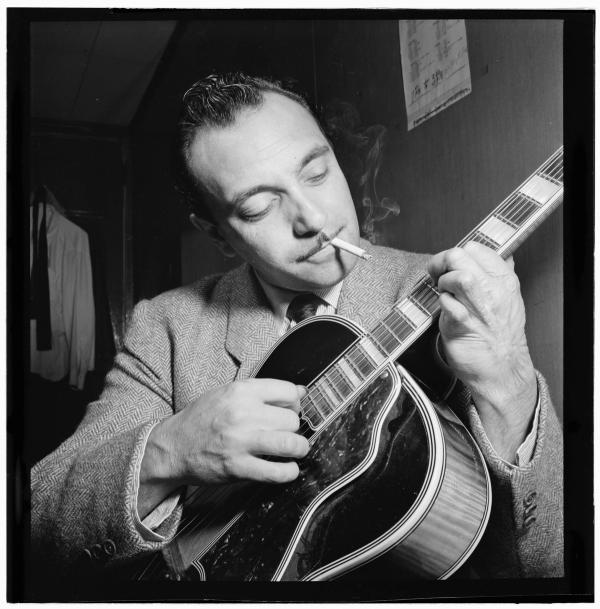
Music popularised by Django Reinhardt in France in the 30s and 40s. It traditionally features two acoustic guitars in place of drums.
- Late Swing / New Testament
Post-swing music from bands that were popular in the swing era, such as Count Basie, Duke Ellington and Benny Goodman. They often sound a little more modern, and the recordings are generally of better sound quality.
Jumpin' at the Woodside
Count Basie - Jumpin' at the Woodside - 1938
Gone With "What" Wind
Charlie Christian - Gone With "What" Wind - 1940
Bei Mir Bist Du Schon
The Andrews Sisters - Bei Mir Bist Du Schon - 1937
Charleston
Sidney Bechet - Charleston - Year unknown
Roll 'Em Pete
Count Basie/Joe Williams - Roll 'Em Pete - Live At Newport - 1957
Flying Home
Jonathan Stout - Flying Home - 2003
Salt Peanuts
Dizzy Gillespie and His All-Stars - Salt Peanuts - 1945
Minor Swing
Django Reinhardt & Stéphane Grappelli - Minor Swing - 1937
Rockin' In Rhythm
Duke Ellington - Rockin' In Rhythm
Discussion
[to delete before launch] For the Tin Pan Alley section - Another example with a much greater difference from the original to the swing version we know is Mack the Knife. https://en.wikipedia.org/wiki/Mack_the_Knife The version from the Three Penny Opera https://youtu.be/_kE_D43b9m0?si=WYXXv8YlT7cTRysV vs the well-known Ella version as an example.
[to delete before launch] the hover text over polyphony is not very visible, you likely will want to adjust the formatting to make it look more likely to be hover text